
Login
Reset Password
Reset Password
Change Password
Create Account
The Gospel
The numeric patterns detailed on this site cannot save you from your sins. They simply point us to the God who can: the Author of the Bible. He is the true and living God who created all things, and is above all, longsuffering in mercy, eternal, invisible, immortal, and holy in all His being. He created you and He loves you. That was proven ~2000 years ago when the Word became flesh so that He would be crucified at the cross of Calvary, as a sacrifice for all, when he took all our sins and bare them in his own body, cursed, and hanging on the tree in our place. Many people think their good deeds will be good enough to outweigh their bad on the day of judgment. What a terrifying day that will be, as they enter the presence of the Most Holy, having trusted their own goodness and the work of their own hands instead of those blood-drenched hands that were nailed upon the cross. We have all sinned. We are all guilty. We have all come short. The good news is that Jesus, the Son of God, tasted death in our place. Christ died for our sins according to the scriptures; And that he was buried, and that he rose again the third day according to the scriptures: 1 Cor 15:3-4 How do you escape damnation? Call upon the Lord in sincerity. Stop trusting your own hands, and take His. 🤝 Believe on the Lord Jesus Christ, and thou shalt be saved. Visit truthischrist.com/grace for more information.
7x7x7x7x7x7x7 Words & Numbers Form the Entire Bible (The 7^7 Elton Anomaly)
Downloads Download All


I have seen an end of all perfection: but thy commandment is exceeding broad.
Psalm 119:96
7^7 Elton Anomaly - Pattern Explained [54:23]
Summary
On October 23, 2023, a South African man named Elton discovered that the entire King James Bible consists of 823,543 words and numbers– including the cover, the book titles, and all the chapters, verses and words inside.
823,543 = 7^7 (Seven to the Power of Seven) = 7×7×7×7×7×7×7
The count was digitally verified the same day by Brandon Peterson (@TruthisChrist), and hand-verified 6 months later (April 23, 2024) after Brandon, with his wife, hand counted every word and number in a Cambridge Concord KJV, checking every 100th word with a digital numbered list to ensure accuracy.
Every page of this Bible (with word counts penciled in the margins) is viewable on YouTube in 4K resolution.
Here is the breakdown of the 7^7 Elton Anomaly:
Text of the Bible
Words in Verse Text: 789,629 (E.g. In the beginning was the Word…)
Words in Psalm Superscriptions: 1034 (E.g. A Psalm of David)
Words in Colophons: 186 (E.g. Unto the Galatians written from Rome)
Structure of the Bible
Words in Cover Title: 5 (E.g. HOLY BIBLE KING JAMES VERSION)
Words in Book Titles: 376 (E.g. THE BOOK OF JOSHUA)
Total Chapters in the Bible: 1189 (E.g. CHAPTER 3)
Total Verses in the Bible: 31,102 (E.g. 16)
Psalm 119 Divisions/Inscriptions: 22 (E.g. ALEPH)
Text of the Bible + Structure of the Bible
T = (789,629 + 1034 + 186) = 790,849
S = (5 + 376 + 1189 + 31102 + 22) = 32,694
T + S = (790,849 + 32,694) = 823,543
The King James Bible = 823,543 which is, 7^7 (Seven to the Power of Seven)

What is God’s number of perfection? Seven.
What is the most printed Bible in history? The KJV.
And because we’re in the digital age, the King James Bible is published in word-for-word uniformity across the world. No matter where its found—in the store, on your lap, or in the mission field—it will always read the same, in every chapter and every verse.
If its covers are missing, pages are torn, or even if the text is misprinted by accident, the 7^7 signature remains, determined not by its physical condition, but by its invisible testimony.
Cambridge, Oxford, TBS, or any publisher who faithfully prints the King James Bible- all bear this 7^7 seal of authority and divine completion.
Want to check it yourself? The following image is a screenshot of the File Download called: .TXT File – List of Words (Concord), which is a numbered list of the entire King James Bible including all 823,543 words and numbers. It ends with the final word “Amen” on word #823,543, which is 7^7. The KJB can also be downloaded as a standard text file here (not a numbered list).
Old & New Testament Breakdown
If we break down the count by Old & New Testament, we find the following results:
Bible Cover: 5
Old Testament: 634,555
New Testament: 188,983
Total: (5 + 634,555 + 188,983) = 823,543 = 7^7
This is especially difficult to pass off as random chance because:
Old Testament: 634,555
Christ = 555x in the Bible
New Testament: 188,983
Jesus* = 983x in the Bible

Notice how the numbers of the names of Jesus and Christ are directly signed into the O.T./N.T. counts! Christ is mentioned 555 times in the Bible, and Jesus(‘) occurs 983 times. But that’s not all:
Old Testament: 634,555
Moses = 634x in the Law (5 books of Moses)
The Old Testament, often called the law, is literally given by Moses in the first 5 books of Moses.
For the law was given by Moses, but grace and truth came by Jesus Christ. John 1:17
Furthermore, no other standalone word is mentioned 634 times in the Law, or in the Old Testament, or in the prophets, or anywhere in the Bible. Only Moses.

If that were everything, surely it would be enough? But that’s not all. Lastly…
New Testament: 188,983
lamb* = 188x in the Bible
book = 188x in the Bible
life* = 188x in the N.T.
In the New Testament, believers are saved by the grace of God, and are written in the Lamb’s book of life.
And there shall in no wise enter into it [New Jerusalem] any thing that defileth, neither whatsoever worketh abomination, or maketh a lie: but they which are written in the Lamb’s book of life. Revelation 21:27

Thus, both the Old Testament and New Testament counts are revealed in a way that seems almost unimaginable:
Old Testament: 634,555
New Testament: 188,983
634x = Moses [Law]
555x = Christ
188x = lamb* / book / life* [N.T.]
983x = Jesus*
To claim this is merely “chance” seems borderline absurd. We are dealing with the most important names/persons of the Bible, who literally represent the Old and New Testaments. And we’re not cherry picking- selectively reporting names that look good for those counts; these are the only men associated with these counts in the Bible (634 is associated with Moses and no other name / 555 is associated with Christ and no other name / 983 is associated with Jesus and no other name). With the exception of a few men like ‘David’ and ‘Israel,’ nobody else in the Bible could even fill the shoes of these large numbers, since most names are mentioned less than 400 times in total.
But here we see Moses and Jesus Christ with laser-like precision- not in the general ballpark, but with the exact number of times their names show up in this Bible.
And of course, all of this works together with the cover title of the Bible to form the 7×7×7×7×7×7×7 count.
Total Words & Numbers in the KJV:
Cover: 5
Old Testament: 634,555
New Testament: 188,983
Total: (5 + 634,555 + 188,983) = 823,543 = 7×7×7×7×7×7×7
If this doesn’t declare, “God was here,” is there anything that would?
The following charts give an exhaustive breakdown of counts per book, with the Old & New Testament totals at the bottom. It is also available to download as a PDF file here.
In the Scriptures
Not only does God promise a book in these last days, but scripture also prophesies that his word will reach the state of “all perfection.” And what is the biblical number of perfection? Seven.
When we find not just one seven, or three, or five, but a perfect seven to the seventh power (7^7) encoded in the very structure of the most influential Bible in history, we cannot discard it as merely a coincidence–not if we are rationally minded, and especially not if we know what the Bible says about the Bible.
When we carefully examine the following passages, we will see with greater clarity how the 7^7 pattern in the King James Bible is the result of prophecy and providence, divinely appointed by God himself:
- Isaiah 34:16 – The “book of the LORD” for all nations in the end times.
- Psalm 119:96 – The prophecy of “an end of all perfection.”
- Psalm 12:6-7 – God’s words, purified seven times and preserved forever.
Isaiah 34:16 – The Prophecy of the Book of the LORD
Let’s begin with the fact that God has foreordained a book that can be sought out by everybody in earth in the last days.
Have you ever read Isaiah 34? If you have, you’ll know the entire chapter is an end-times prophecy, as seen in its many parallels and cross references to other apocalyptic passages in the Bible (especially Revelation). Here are a few of its passages cross referenced to the book of Revelation:
- Isaiah 34:2 → Revelation 16:14,16, 17:14, 19:19 (The nations gathered for battle)
- Isaiah 34:4 → Revelation 6:13-14 (The heavens rolled up like a scroll)
- Isaiah 34:5-6 → Revelation 19:15 (The sword of the Lord)
- Isaiah 34:8 → Revelation 18:20 (The day of God’s vengeance)
- Isaiah 34:10 → Revelation 19:3 (Babylon’s smoke goes up forever)
- Isaiah 34:11-15 → Revelation 18:2 → Leviticus 11:13-19 (A cage of unclean birds)
But the part that grabs our attention the most is at the conclusion of this chapter, where God proclaims:
Seek ye out of the book of the LORD, and read: no one of these shall fail… Isaiah 34:16

This begs the question: who is the “ye” that is supposed to seek out of this book?
“Seek ye out of the book of the LORD, and read…”
After carefully examining the chapter, we understand that the “ye” in verse 16 isn’t addressed to Israel or to the unclean birds or to any particular nation in the time of Isaiah, but to a worldwide audience who is able to check that all of these things have come to pass. The key is in verse 1:
Come near, ye nations, to hear; and hearken, ye people: let the earth hear, and all that is therein; the world, and all things that come forth of it. Isaiah 34:1
This book of God is for all nations. The entire world. In the end times.
This is a direct command to a future generation (since these end time events in Isaiah 34 haven’t transpired yet). And in that generation, Isaiah, under God’s inspiration, boldly declares to the entire world: Look for yourself. See if every word has come to pass.
Anybody who is familiar with the history of the Bible will agree that there is one particular Bible that stands head and shoulders above the rest, in terms of its majesty, power, and influence.
The King James Bible is the perfect candidate for this “book of the LORD” prophecy.
The world speaks English. And this English Bible is the most printed, quoted, memorized, cherished, and influential Bible in history.
And it was established at least 400 years before the fulfillment of all these end-time events described in Isaiah 34.
But what would seal off any doubt? The King James Bible in its settled form yields a total count of: 823,543 — that is, 7×7×7×7×7×7×7 words and numbers.
This is not coincidence. Every Bible student knows that God’s number of divine completion is seven. This book, that perfectly adds up to 7^7, is completion in the highest sense of the word.
But perhaps the most important part is that the King James Bible is not going to change. It won’t be updated any more. It has reached a state of total completion, not just numerically, but textually. It has settled into its absolute resting place. Even when KJV spin-offs are produced, the KJV itself is established. Words can no longer fall to the ground because of human error. Fluctuation no longer occurs by mishap of printers. We have a standard text, and we have all of it in digital form. We have counted the chapters, the verses, the words, the letters, and even how many words are capitalized vs lowercase. If you were to produce a KJB that was altered by one or two words, we have technology to find those rogue words immediately.
Imagine if archaeologists uncovered a 1,500-year-old scroll containing all 66 books of the Bible, written in a dead language—and it just so happened to total exactly 7^7 words. Though Hebrew and Greek counts would never reach that high in the Old & New Testaments, let’s just pretend for a moment: don’t you think headlines would explode? Wouldn’t the church marvel over such a thing as this, where “Moses” and “Christ” and “Jesus” were internally built into the count?
Yet we already have such a wonder: the complete book of the LORD, in our language, perfectly preserved and freely available to all.
And he said unto me, It is done. I am Alpha and Omega, the beginning and the end. I will give unto him that is athirst of the fountain of the water of life freely. Revelation 21:6
Who could have imagined such a reality one thousand years ago, before printing presses and computers? God’s complete book, established in every corner of the earth—sealed in the form of seven to the seventh power.
And yet, here it is… in our very hands.
Psalm 119:96 – An End of All Perfection
Psalm 119:96 contains a curious statement that most Bible believers pass over without second thought. But take a moment to read it carefully:
I have seen an end of all perfection: but thy commandment is exceeding broad. Psalm 119:96

Because the Bible was not completed in any state of perfection when this Psalm was written, we can be quite sure that this verse is prophetic.
The Psalmist declares, “I have seen…”—as if given a vision of something that did not yet exist in his time. And we know that God sees the end from the beginning, and reveals prophecy in a way that makes it seem as if it already happened. Paul says, “…God, who quickeneth the dead, and calleth those things which be not as though they were.” Romans 4:17
So what did the Psalmist see in verse 96? An end of all perfection. Completion in its fulness.
The Bible often associates the number seven with perfection and completion. But this verse speaks of all perfection—not just a single seven, but a complete amount.
And what is he referring to? “Thy commandment.” The word of God. His law and testimony. The Bible.
He specifically says, “thy commandment is exceeding broad,” which gives the sense that this Psalmist has never seen anything like it in his day. The complete commandment of God is overwhelming in size, and is perfect in every way imaginable.
Now, the Psalmist could be talking about a vision of God’s word in heaven, as he declares in verse 89:
“For ever, O LORD, thy word is settled in heaven.” Psalm 119:89
But what if God has always willed his commandment to be perfectly revealed on earth, just as it is in heaven? After all, the Bible was not made for God, but for man. It was revealed by inspiration of the Holy Ghost through human authors who lived on earth. The Bible is the testimony of Jesus Christ to the world, showing us it is only through the Son that we can have eternal life and come to the Father. Wasn’t it Jesus who prayed: “…Thy will be done in earth, as it is in heaven.” (Matthew 6:10)?
If God’s word is settled in heaven, then surely he wills it to be settled on earth also. And if that is the will of the Father, who can prevent him from performing it?
To make matters more interesting, look at where we’re reading in scripture. Psalm 119 is the longest chapter in the Bible- and it’s entirely about the word of God.
Psalm 119 is divided into 22 sections of 8 verses each, and in Hebrew it is “acrostic” in nature–where each verse begins with a subsequent letter (in this case, 8 times before moving onto the next letter) until the 22-letter Hebrew alphabet is fulfilled. (22 × 8 = 176 verses in total). See the image below:

Think about it.
People say chapters and verses are not inspired.
But we are looking at a prophecy of the end of the Bible in its perfect state (Psalm 119:96), and the prophecy we are observing has always been fixated in chapter and verse format.
It’s not a ‘modern invention’ that causes the 96th verse to read, “I have seen an end of all perfection: but thy commandment is exceeding broad.” It has always been the 96th verse, or line, of this Psalm, from the day it was first penned in Hebrew.
And if God truly gave us his word with these divisions, which he did, then truly the Spirit was behind its design, and there was purpose not just in the words, but in the way he divided it. This same thing is seen in other places of scripture, including the entire book of Lamentations.
But the word of the LORD was unto them precept upon precept, precept upon precept; line upon line, line upon line… Isaiah 28:13
God perfectly ordered the structure of Psalm 119.
And he prophesied the end of all perfection inside of it.
What then are we to make of the most influential Bible in history, settled in the world language, showing up with 7x7x7x7x7x7x7 in its totality (Text + Structure)?
Psalm 12:6-7 – Sevenfold Purification of God’s Word
The words of the LORD are pure words: as silver tried in a furnace of earth, purified seven times. Thou shalt keep them, O LORD, thou shalt preserve them from this generation for ever. Psalm 12:6-7
The LORD himself counts how many times his words are purified: seven times.

We cannot dismiss biblical numbers as meaningless. God is the one who gives significance to particular numbers. When it comes to the number seven, we see no other number like it in scriptures; God uses it over and over again:
- Seven days of creation.
- Sevenfold vengeance for Cain.
- Seven day warning to Noah.
- Seven years of plenty.
- Seven years of famine.
- Seven feasts.
- Seven times compassing Jericho.
- Seven priests, seven trumpets, seventh day.
- Seven locks on Samson’s head.
- Seven dips in Jordan.
- Seven times a day praising God.
- Seven pillars of wisdom.
- Seven loaves into seven basketfuls.
- Seven times forgiveness.
- Seventy times seven.
- Seven churches in Revelation.
- Seven seals, trumpets, and vials.
- Seven stars, seven candlesticks.
- Seven horns, seven eyes.
- Seven Spirits of God.
This is not even close to an exhaustive list.
And in Psalm 12, sevenfold purification of God’s words.
Not only are his words purified seven times, they are preserved “for ever.” (Psalm 12:7)
Does the LORD have a book in the end times for all the world to seek out of and read?
He does.
Does he say that his commandment has an exceeding broad end of all perfection?
He does.
Does God purify his words seven times and preserve them for ever?
He does.
Then what stops us from believing the KJB structured with a total count of 7^7 is not only a mathematical anomaly, but a scripturally foreordained witness from God. A sign and a seal from the Holy Ghost that he has providentially guided his book into all truth (John 16:13).
Remember, God doesn’t will that all men learn Hebrew and Greek. He wills that all men come unto the knowledge of the truth.
What better way for “all men” to “come” unto the knowledge of our Lord Jesus Christ, then to give it to them in their most spoken language, structured according to God’s number of perfection to the power of God’s number of perfection?
For this is good and acceptable in the sight of God our Saviour;
Who will have all men to be saved, and to come unto the knowledge of the truth.
For there is one God, and one mediator between God and men, the man Christ Jesus;
Who gave himself a ransom for all, to be testified in due time.
1 Timothy 2:3-6
…And let him that is athirst come. And whosoever will, let him take the water of life freely.
Revelation 22:17
Coherence
The full count of 7x7x7x7x7x7x7 is astonishing, even hard to believe for many, including Christians–especially if they hold the position that only the original languages could have been inspired. Furthermore, this count, if truly foreordained, suggests that God prescribed not only the English translation but also chapter and verse numbers, the titles of the books, and even the title of the Bible itself.
You have heard it said: ‘Chapter and verse numbers weren’t added until thousands of years after scripture was first written.’ And that’s true for the most part. However, in certain places, these divisions existed from the very beginning. Not just chapter divisions (Acts 13:33), but verses too.
For example, we’ve already covered how Psalm 119 was written as a single chapter divided into 22 groups of eight lines each (thus, 22×8, totaling 176 verses). It contains 176 lines in Hebrew, and 176 verses in English, and 176 verses in every other translation. Thus, Psalm 119 was clearly divided into proto-verses exactly as we have them today.
Other acrostic Psalms exist as well. But many English speakers do not realize that the entire book of Lamentations is structured both alphabetically and mathematically.
The first four chapters of Lamentations are acrostic—Chapter I (22 verses), Chapter II (22 verses), Chapter III (66 verses; 22×3), and Chapter IV (22 verses). Chapter V, however, is not acrostic. Yet it still is written out as 22 verses, which means the numeric structure of the book was still important, even when the acrostics stopped. Altogether, Lamentations contains exactly 7 sets of 22 verses (totaling 154 verses, or 22×7, equivalent to 77+77).

We have scriptural grounds to believe that God inspired not only the text, but also the overarching structure of his word, fully aware of how it would ultimately be arranged. These Hebrew examples clearly demonstrate divine oversight in the chapter and verse divisions, even in the originals, making it easy to believe that God had an even greater structure in mind for “an end of all perfection” (Psalm 119:96).
Beyond chapter and verse divisions, it’s important to note that the King James Bible wasn’t initially called the “King James Version” when published in 1611. This label was used generations afterward. Nevertheless, today, chapter numbers, verse numbers, book titles, and even the Bible’s title itself are well-established and permanently settled. This reality is undeniable, and it only takes child-like faith to believe that:
God knows the end from the beginning, which means he always knew the most printed Bible in the world would end up in this state.
And God’s words are purified seven times (Psalm 12:6).
Having entered the digital age, every jot and tittle is accounted for. Every book, chapter, verse, word, and letter is established. While spelling variations may exist across KJB editions (e.g., “inquire” vs. “enquire,” or “rasor” vs. “razor”), the overall textual count remains fixed, including all the necessary components to produce a complete King James Bible.
Which Elements Are Worthy of Counting?
Some question the importance of elements like page numbers, marginal notes, or the words “THE END” printed at the conclusion. However, none of these elements are essential. Page numbers, marginal notes, and footnotes vary by edition, and no printer or reader would deem them necessary for possessing the complete Bible.
If we were to list the essential features of a King James Bible, ranked by significance, they would include:
- Verse Text (inspired scripture)
- Book Titles (for quick reference and to identify authorship)
- Superscriptions (Psalm Headings) (inspired–referenced by Christ and Paul)
- Chapter Divisions (for quick reference and general location)
- Verse Divisions (for precise reference)
- Colophons (Epistle Postscripts) (translated by the KJV translators; although debated by some, these were not invented but translated from Greek texts)
- Psalm 119 Inscriptions (indicates acrostic letter in Hebrew, showing God’s hand over verse structure, printed in the KJB since 1611)
- Title of the Bible (indicating language and version for identification)
— - New Testament Title Page (helpful division between OT and NT, though not essential)
- Chapter Summaries (non-essential, varies by printer/printing/edition)
- Marginal Notes / Cross References / Study Notes (non-essential, varies)
- Page Headings (non-essential, varies)
- Page Numbers (non-essential, varies)
- “FINIS” / “THE END” (non-essential stylistic choice of the printer)
- Table of Contents (non-essential, varies)
- Title Pages (non-essential, varies)
- Appendices, Maps, Concordances (non-essential, varies)
You may have ordered the first eight items somewhat differently, but regardless, the Elton Anomaly pertains specifically to the most essential components of a complete King James Bible. If we were given one opportunity to print a King James Bible intended for preservation for future generations, the first eight items listed above would be paramount.
Counting One-Chapter Books
There are five books in the Bible that consist of only one chapter: Obadiah, Philemon, 2 John, 3 John, and Jude. In most King James Bibles, these books do not display the heading “CHAPTER 1” at the beginning. Why? Because there is no need to divide what is already a single, self-contained chapter—it is implicitly chapter 1 by default.
This detail becomes important in the context of the Elton Anomaly, where every word and number in the King James Bible is counted. Since “CHAPTER 1” is not printed in these one-chapter books, we account for it by penciling it in.

Some critics have objected, claiming this is manipulation—adding what isn’t there to force a predetermined outcome. But this objection misrepresents how the count works- and fails to grasp the overall consistency of the Elton Anomaly.
To understand why it’s okay to include “CHAPTER 1” in the count for Jude, Obadiah, Philemon, etc, it’s important to understand how we are counting the Bible itself.
Consider how chapters and verses appear in the listed format used for hand-counting the entire Bible:
John 7:53 to John 8:2
…
709565. house.
709566. CHAPTER
709567. 8
709568. JESUS
709569. went
709570. unto
709571. the
709572. mount
709573. of
709574. Olives.
709575. 2
709576. And
We used this list to physically count the entire Bible. And it worked out perfectly, because physical Bibles do not include the “1” verse numbers at the beginning of chapters. Thus, take careful notice of two things that occur in this listed format:
-
“CHAPTER 8” is counted as two separate words.
-
Verse 1 is not labeled—the chapter simply begins without a “1.”
This is how physical Bibles are printed. And because of this format, the chapter and verse counts offset each other: the omission of verse “1” is balanced by the inclusion of chapter headings as two separate words.

But if we wanted to, we could have also formatted the list like this (changes in bold)…
709565. house.
709566. CHAPTER 8
709567. VERSE 1
709568. JESUS
709569. went
709570. unto
709571. the
709572. mount
709573. of
709574. Olives.
709575. VERSE 2
709576. And
It would have been a little less smooth with this setup as we manually counted every word and number in the Bible. But if we did set it up like this, the total count would remain the same, as you can see for yourself in the text file. The structure of the Bible—1189 chapters and 31,102 verses—is preserved. The complete count still yields 823,543, exactly 7^7.
Everyone agrees these five books (Obadiah, Philemon, etc) consist of one chapter each. Nobody says Jude has zero chapters. The absence of the printed phrase “CHAPTER 1” doesn’t mean the chapter is missing—it simply reflects a formatting choice, just as we see with the absent verse 1 formatting.
If, and when, publishers include “CHAPTER 1” at the beginning of one-chapter books (which they do, sometimes), they are not adding to the Bible; they’re simply making explicit what is already structurally true: Jude = 1 chapter.

Thus, the Elton Anomaly is not dependent on superficial printing choices. Otherwise all the KJBs with large drop-caps numbers for chapters would be 1189 words short, simply because they don’t print “CHAPTER” or verse “1”. The Elton Anomaly, rather, reflects the full structure of the King James Bible, including every chapter and verse.
Conclusion: To exclude one-chapter books from the count simply because “CHAPTER 1” isn’t printed in Obadiah, Philemon, 2 John, 3 John, and Jude, would be like denying the presence of all verse 1’s in the Bible since the number “1” is always invisible, or like someone claiming I don’t have a middle name because I don’t have a middle name on my nametag. Of course I have a middle name. And of course, we should count the chapters in one-chapter books.
Counting Colophons
Some dismiss the colophons—or postscripts found at the end of Paul’s epistles—as uninspired or unreliable. Sometimes, King James Bibles will not even print them. But regardless of one’s opinion, it must be understood that the King James translators did not fabricate these notes. They translated them directly from Greek, carefully preserving what had been handed down through centuries of transmission.
Unlike study notes or chapter summaries, these colophons are not interpretive additions. They are fixed textual elements, translated in a specific and consistent way.
Critics often question their validity simply because the information within them may seem unclear or inconsistent. But this line of reasoning could just as easily be applied to the parallel accounts in Kings and Chronicles, or the differing perspectives in the four Gospels. The presence of difficulty does not justify dismissal.
As Bible believers, our posture toward scripture should not be to assume error, but to assume our own understanding is lacking. “…let God be true, but every man a liar…” (Romans 3:4).
In addition to their historical legitimacy, the colophons also play a key role in the numerical integrity of the King James Bible. They directly contribute to the remarkable 77,777 pattern—where the first and last words of the first and last verses in the Bible collectively yield 77,777 mentions. Their presence is not optional—it is essential to this count.
Thus, the inclusion of colophons is not only justified in their presence in Greek, but in one of the most extraordinary patterns of the KJB. They are part of the structure, part of the translation, and part of the testimony.
Counting the Title of the Bible
Is it reasonable to count the title—“HOLY BIBLE: KING JAMES VERSION”—as an essential part of the Bible? The simple answer: Absolutely.
Consider this: If you downloaded a Bible app with 20 different versions, but the app didn’t label them—only listing “Bible Translation 1,” “Bible Translation 2,” and so on—you’d instantly realize how essential the title is.
Imagine this in the physical world: a bookstore where none of the books have titles on their spine or cover. You wouldn’t know whether you were picking up Moby Dick, the Quran, or the Bible. And even once you found a Bible, there’s nothing to tell you which translation you’re holding. Without titles, we would be disorganized, inefficient, and lost. The title isn’t decorative—it’s definitive. It identifies the source, the authority, the language, and the translation tradition.

Conclusion: The title “HOLY BIBLE” tells us what the book is, and what the book it isn’t. It’s not the Quran. It’s the Bible. The title “KING JAMES VERSION” tell us which Bible it is. Without it, how could we distinguish it from an ESV, NIV, or any other translation?
The title belongs in the 7^7 count. It is consistent with the rest of the count which includes the words in individual book titles. Why not include the title of “the volume” (Psalm 40:7, Hebrews 10:7) which contains those 66 books? It’s not just pretty gold foil on the cover—it is the declaration of the book’s identity and authority.
Which KJB? Cambridge Concord vs PCE
Those who are unfamiliar with the King James Bible believe that it exists in many different forms, indicating many different counts. But the reality is that the KJB is settled into two forms: the Cambridge Concord Edition and the Pure Cambridge Edition (PCE). Both the Concord and PCE are considered the final settled text of the KJB. And besides a few spelling, capitalization, and punctuation differences between them, they are 99.99% identical. The only word count difference is found in Exodus 23:23, where the PCE contains an additional italicized word “and”.
Exodus 23:23 – Concord KJB
For mine Angel shall go before thee, and bring thee in unto the Amorites, and the Hittites, and the Perizzites, and the Canaanites, the Hivites, and the Jebusites: and I will cut them off.
Exodus 23:23 – PCE KJB
For mine Angel shall go before thee, and bring thee in unto the Amorites, and the Hittites, and the Perizzites, and the Canaanites, and the Hivites, and the Jebusites: and I will cut them off.
Total Word Count (Verse Text + Superscriptions + Colophons)
Concord: 790,849
PCE: 790,850
Does this throw off the 7^7 count? Well, it could, but it doesn’t have to.
That’s because the King James Bible goes by two names:
- King James Version (3 words)
- Authorized Version (2 words)
It can also be called a combination of these things, such as “Authorized King James Version”, but its almost always abbreviated as KJV or AV. For critics, this is enough to suggest the Elton Anomaly is just a man-made fluke. You can combine whichever version fits the count.
But for us, we see God’s hand at work over the smallest of details. God knew the KJB would be called both the KJV and the AV, so he accounted for the 1-word difference here in Exodus 23:23, and he used both of these printings to establish the count beyond any shadow of a doubt: if one man claims the Bible title could never be “King James Version” then he is stuck with the PCE producing a perfect 7^7 count. And vice versa.
- “HOLY BIBLE – KING JAMES VERSION” + [Concord] Text + Structure = 7^7
- “HOLY BIBLE – AUTHORIZED VERSION” + [PCE] Text + Structure = 7^7
Besides Cambridge, the official printer of the King James Bible, every other printer (including Oxford) will print KJBs that match the word count of either the Concord or the PCE.
Here is a visual comparison between the Concord and the PCE:
Conclusion: It is an invalid assumption to claim that there are many different editions of the KJB printed today. Unless you are looking through pre-1900s KJBs at the antique shop, this objection is broken and holds no water. The KJB is settled with its 7^7 count, a count that exists everywhere King James Bibles are published around the world.
Note: the most numerically significant edition is the Concord, which produces an O.T. count of 634,555 – see section called Old & New Testament Breakdown. (PCE = 634,556)
Is there a correct reading for Exodus 23:23? “the Hivites” (Concord) or “and the Hivites” (PCE)
Historically speaking, there is no way to 100% discern whether or not the PCE’s additional word “and” belongs in Exodus 23:23. Here is a downloadable zip folder showing how it went back and forth between the Concord and PCE readings from 1611 until modern KJB printings.
Biblically speaking, there is also no way to 100% discern whether or not the word belongs in the text. The word does not appear in Hebrew, which is why it is italicized in the PCE. But even when we look at the other references to the Hivites in the Bible, we find readings that match both the Concord and the PCE.
Joshua 24:11 has an identical setup to the Concord where “the Hivites“ is the only people listed without the “and…”
Joshua 24:11 – And ye went over Jordan, and came unto Jericho: and the men of Jericho fought against you, the Amorites, and the Perizzites, and the Canaanites, and the Hittites, and the Girgashites, the Hivites, and the Jebusites; and I delivered them into your hand.
Here is a larger list of verses mentioning the Hivities (PDF), which allows us to see that there is no fixed structure that can be applied with force on Exodus 23:23.
Project Gutenberg Probability (~1 in 378 million)
Dr. Jones (Ph.D Mechanical Engineer) conducted a detailed probability analysis using the Project Gutenberg online database, which contains over 45,000 digitized English books. The primary goal was to estimate the likelihood of a randomly selected book containing exactly 823,543 words, equivalent to 7^7 words.
The analysis utilized data from 45,336 English books in the Project Gutenberg Corpus (SPGC), carefully excluding books without valid word counts and specifically omitting the KJV to ensure accuracy and prevent bias.
As a result of his analysis, Dr. Jones estimates the probability of a book having exactly 7^7 words to be 1 in ~378 million.
Dr. Jones’ histograms and notes are detailed below. You may also download his excel file at the end of this section.

Figure 1 shows the histogram of total word counts for books in the Project Gutenberg (PG) online database of digitized books. This histogram was created using the Standardized Project Gutenberg Corpus1 (SPGC), a frozen database of 55,905 books downloaded from the Project Gutenberg website in July 2018. Word counts were taken from the SPGC word count files available at https://doi.org/10.5281/zenodo.2422560. Some data processing of PG files was done by SPGC that affects word counts; for example, they removed numbers from the PG text files to avoid counting page numbers. This is not expected to significantly change the probability distribution or the outcome of this analysis.
The following steps were taken to produce Figure 1:
- The “counts file” for each book in the SPGC was read, and the book word count calculated as the sum the word counts for all unique words.
- The book word counts were then adjusted to estimate the book word count if verse numbers, chapter numbers, chapter titles, and book titles were included as in the case of the KJV Bible Elton Anomaly. An adjustment factor was calculated to make the SPGC word count for the KJV Bible equal 7^7 words as in the Elton Anomaly. This adjustment factor came out to be 1.04, or a 4% increase in book words. The word count for each SPGC book was multipled by this factor, and the resulting adjusted book word counts is what is plotted in the histograms and used in the analysis. This adjustment did not significantly affect the probability distribution or outcome of the analysis.
- Books with zero word counts (resulting from empty files for whatever reason; perhaps because SPGC wasn’t able to count words in Chinese characters, etc.) and books not in English were excluded from this analysis. The KJV Bibles in the SPGC were also excluded to not bias the results. This resulted in a set of 45,336 books used in this analysis.
Figure 1 shows an estimate of the distribution of English books. The distribution is heavily skewed toward shorter books, and books with 7^7 words lie far out in the tail of the distribution. Relatively few books are long enough to have a chance of producting the 7^7 result.

Figure 2 is zoomed in to show the histogram around 7^7 words. The blue bin centered on 7^7 words has a width of 200,000 words and contains 24 books. The red rectangle is the histogram bin for books with exactly 7^7 words and a bin width of 1. The probability of a book having exactly 7^7 words is the area of the red bin divided by the total area under all of the histogram.
The probability of a book being in the blue bin centered on 7^7, is the area of that bin (24 × bin_width) divided by the area of all bins in the histogram (45,336 × bin_width). Note that the sum of the heights of all the bins will equal the total number of books in the analysis set, 45,336, and that the bin_width cancels out in the division, leaving the probability to be 24 divided by 45,336, or 0.000529, or 1 chance in 1889.
The probability of a book in the blue bin centered on 7^7, having exactly 7^7 words (landing in the red bin) is 1 divided by the width of the bin, or 1 in 200,000, because all outcomes within a bin are assumed to be equally probable.
Therefore, the probability of a book having exactly 7^7 words is estimated to be (1/1889) × (1/200,000) or 1 in 377,800,000. This is equivalent to the area of the red rectangle divided by the area under the entire histogram. This result will vary some based on choice of histogram bin width , but is in the range of 1 in 350 million to 1 in 450 million.
In conclusion, the probability of a book having exactly 7^7 words is estimated to be approximately 1 in 378 million, based on an analysis of the Project Gutenberg online database of books in English.
Download Excel File – Elton Analysis – by Dr. Jones
Footnotes:
1. Gerlach, M., Font-Clos F. A Standardized Project Gutenberg Corpus for Statistical Analysis of Natural Language and Quantitative Linguistics. Entropy 2020, 22, 126; doi:10.3390/e22010126.
Conclusion
The Bible in its settled form, in the most spoken language on earth, consists of exactly 7x7x7x7x7x7x7 words and numbers. The 7^7 Elton Anomaly is the ultimate seal of God’s word, prophesied and providentially placed by the Spirit of truth himself. An end of all perfection. The book of the LORD in its finished state.
We are not just looking at a random Bible translation. We are looking at the testimony of Jesus Christ in its most printed, memorized, cherished, and world-shifting form. It would be astonishing if any Bible came within ten digits of 823,543 (7^7). But to find the most fruit-bearing Bible in history landing exactly on this number of total perfection, cries out with all majesty and power: The words of the LORD are pure words: as silver tried in a furnace of earth, purified seven times. Thou shalt keep them, O LORD, thou shalt preserve them from this generation for ever. Psalm 12:6-7

Verified by Hand in a Printed Bible
This count has been exhaustively verified digitally, and by hand, as explained and displayed in this video in the final edition of the King James Bible – printed for the past hundred years until today, and forever in the future (because the King James Bible is settled into its final form).
Extra Notes:
The digit root sum reduces to 7 in all these totals:
Entire Bible – 823,543
(8+2+3+5+4+3) = 25 …. (2+5) = 7
–
Cover + O.T. + N.T. (KJV / Concord) – (5, 634,555, 188,983)
5 + (6+3+4+5+5+5) + (1+8+8+9+8+3) = 70 … (7+0) = 7
Cover + O.T. + N.T. (AV / PCE) – (4, 634,556, 188,983)
4 + (6+3+4+5+5+6) + (1+8+8+9+8+3) = 70 … (7+0) = 7
–
Cover + O.T. + N.T. (KJV / Concord) Line by Line – (5, 634,555, 188,983)
Cover = [5]
O.T. = (6+3+4+5+5+5) = 28 … (2+8) = 10 … (1+0) = [1]
N.T. = (1+8+8+9+8+3) = 37 … (3+7) = 10 … (1+0) = [1]
Total = [5] + [1] + [1] = 7
Cover + O.T. + N.T. (AV / PCE) Line by Line – (4, 634,556, 188,983)
Cover = [4]
O.T. = (6+3+4+5+5+6) = 29 … (2+9) = 11 … (1+1) = [2]
N.T. = (1+8+8+9+8+3) = 37 … (3+7) = 10 … (1+0) = [1]
Total = [4] + [2] + [1] = 7
The Gospel
The total words and numbers in the Bible cannot save you from your sins. They simply point us to the one who can: the Creator–the Father, the Word, and the Holy Ghost; the triune God of the Bible.
It is through the Bible, the word of God, that mankind can know absolute truth, revealed by the Spirit of truth himself. And the truth is that the LORD is a God of holiness, love, and judgment (Isaiah 6:3, 1 John 4:15-16, Deuteronomy 32:4). He is not afar off as deists claim. He is nigh at hand, and he cares about each of us individually. He made us in his image, and though we have all come short of his glory by sinning and corrupting ourselves, he desires every one of us to be saved, and to have eternal life in the kingdom of his dear Son.
Because God is holy and just, he brings ultimate justice to all things, evil and good. He hates sin, wickedness, and pride. But he loves humility, righteousness, and mercy.
It is in this reality we find ourselves in the midst of the most important plane of our existence: the judgment of God. Who cares what man thinks of you? How does God see you? Are you in right standing to enter eternity and stand before the power of his absolute presence?
This is where the law comes in. Thou shalt not… kill, commit adultery, steal, bear false witness, covet…
Have you ever told a lie? Have you ever lusted in your heart? Have you ever stolen? The Bible says that we are all sinners, and if we say that we have no sin, we deceive ourselves, and the truth is not in us.
As sinners, we are unable to remain in his presence.
For thou art not a God that hath pleasure in wickedness: neither shall evil dwell with thee. Psalm 5:4
For all have sinned, and come short of the glory of God; Romans 3:23
And that’s why Jesus, the Son of God, came down to earth ~2000 years ago. He didn’t come to condemn us, but to give himself on the cross for us, and to wash our sins away. The name of “Jesus” means “Jehovah’s salvation” because he came to save us from our sins (Matthew 1:21), and ultimately from the lake of fire (Revelation 20:15 – And whosoever was not found written in the book of life was cast into the lake of fire.).
There’s a reason why John 3:16 is the most quoted verse of the Bible. It makes the purpose of God ever so clear:
16 For God so loved the world, that he gave his only begotten Son, that whosoever believeth in him should not perish, but have everlasting life.
17 For God sent not his Son into the world to condemn the world; but that the world through him might be saved.
18 He that believeth on him is not condemned: but he that believeth not is condemned already, because he hath not believed in the name of the only begotten Son of God.
John 3:16-18
In Romans, Paul testifies:
But God commendeth his love toward us, in that, while we were yet sinners, Christ died for us.
Romans 5:8
And Peter says:
Who his own self bare our sins in his own body on the tree, that we, being dead to sins, should live unto righteousness: by whose stripes ye were healed.
1 Peter 2:24
And John bears witness:
And we have seen and do testify that the Father sent the Son to be the Saviour of the world.
1 John 4:14
We were dead in our sins, but Jesus came to save us from those sins.
He came to give us light, life, and grace. And when he died on the cross, he took all of our sins upon himself as a propitiation and a sacrifice for us. He faced the wrath of God for our sins. He paid the price, and bought us with his own blood.
Though fully God, he took on flesh, and as a man, he took the keys of hell and death, rose again the third day, and sat down on the right hand of God.
But this man, after he had offered one sacrifice for sins for ever, sat down on the right hand of God;
Hebrews 10:12
It is from his heavenly throne, the Son of man and Son of God offers us complete forgiveness and grace. Salvation is not found in our good works or our morality. It is found only in Jesus Christ, who asks the most important question you’ll ever have to answer:
Jesus said unto her, I am the resurrection, and the life: he that believeth in me, though he were dead, yet shall he live: And whosoever liveth and believeth in me shall never die. Believest thou this?
John 11:25-26
Isn’t it amazing? God has written out 7^7 words and numbers to reveal himself to us. And yet, he has made it so simple, that our eternity hangs on a Yes or No question.
35 Jesus heard that they had cast him out; and when he had found him, he said unto him, Dost thou believe on the Son of God?
36 He answered and said, Who is he, Lord, that I might believe on him?
37 And Jesus said unto him, Thou hast both seen him, and it is he that talketh with thee.
John 9:35-37
Videos
@TruthisChrist
Watch on YouTube (Open in a new tab)@TruthisChrist
Watch on YouTube (Open in a new tab)Sister Patterns

Last Words of Genesis and Revelation (Egypt & Amen) are 77th Mentions

Last Words of Genesis and Revelation (Egypt & Amen) are 77th Mentions
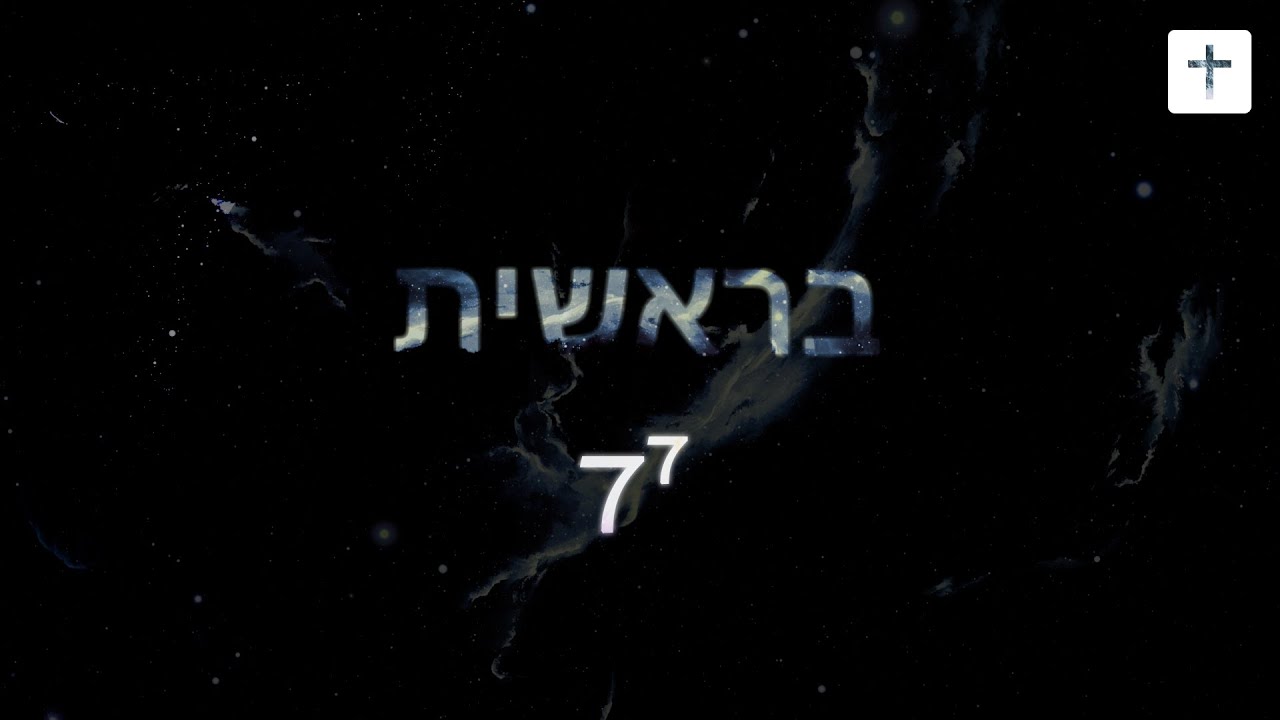
The 7^7 Elton Anomaly Embedded in the First Word of the Hebrew Bible (913) and the Golden Ratio
The 7^7 Elton Anomaly Embedded in the First Word of the Hebrew Bible (913) and the Golden Ratio


Every Name in O.T. & N.T. Book Titles + (God / Jesus) 7777x when in the Same Book

Every Name in O.T. & N.T. Book Titles + (God / Jesus) 7777x when in the Same Book


Submit Rating
7x7x7x7x7x7x7 Words & Numbers Form the Entire Bible (The 7^7 Elton Anomaly)
Public Beta
Thank you for visiting KJV Code in its early launch. If you see a pattern that lacks completeness, that’s because it is still a work in progress. The search result itself should be accurate, but we have yet to add exhaustive summaries and other details to each pattern. Thank you for your patience as we continue to build and improve the site over time. Be sure to check out the FAQ page for hard-to-answer questions and our YouTube channel (@KJVCode) to see when new Pattern Audios are uploaded. If you run into any major issues, feel free to email us at kjvcode@gmail.com
Probability Calculator
At least 1 probability required.
Search Eligible PatternsPatterns: 0
Where did the kjvCode.txt file linked here come from? I have downloaded kjv text files from numerous websites, but even when removing the copyrights and notes from these various text files and just counting the plain text I cannot replicate the Elton Anomaly.